
The test used now, called PCR (or polymerace chain reaction), uses a nasal or throat swab sample and identifies the virus. These tests take at least five hours to give results. The rapid test, on the other hand, uses a blood sample and gives results based on detecting the presence of certain antibodies that react to the coronavirus protein.

For now, Bounce, Shuttl, Fab Hotels, Instamojo, Zomato, Curefit, and HealthifyMe, among others, are going for salary deductions. Most of the consumer internet start-ups, besides those who are in the grocery delivery, education tech, and video conferencing business, would ultimately lay-off people and cut back salaries.

The Central Drugs Standard Control Organisation said while the rights, safety, and well-being of trial subjects were of paramount importance, protocol amendment, deviation or modification might be necessary in some cases owing to unavoidable circumstances.
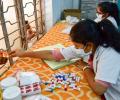
The situation is severe in North India as most of the logistics operation was manned by migrant labourers from Uttar Pradesh and Bihar. The problem with manpower is not only in courier and delivery services, but also at a shop level.

While some researchers are developing prototypes for ventilators to overcome their shortage, others have teamed up to develop testing kits.
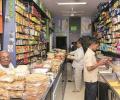
'90 per cent of the food and grocery business is still with the kiranas.' 'If kiranas are not allowed to operate, it becomes a serious issue.'
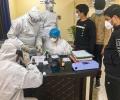
The ICMR is working on a war footing to develop the testing ecosystem -- especially for the screening blood tests. NIV, Pune, is in the process of validating antibody-based screening kits.

The telecast was viewed by 197 million Indians, higher than the Indian Premier League final which was watched by 133 million, reports Sohini Das.

However, many of these firms were facing an uphill task of convincing the people on the ground to return to work, as many are apprehensive of their safety.
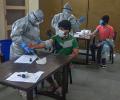
At present, the cost of testing for COVID-19 is Rs 4,500 per examination and the results are available within 24 hours. Almost 90 per cent of queries fizzle out after patients realise the cost of testing will not be borne by the government.

Medicines that fall under Schedule H category (class of prescription drugs) would be provided against a valid prescription that can be submitted either physically or over e-mail. Narcotics, psychotropics and controlled substances, though, cannot be delivered.

'We are going to be overwhelmed by the need for hospital beds. There are simply not enough beds in government hospitals.' 'We will need a large number of medical professionals and without the private sector's involvement, the government won't be able to expand capacity.'

There is a lot of police action on the ground and even inter-state movement has been stopped, because of which deliveries of essential items via platforms, such as Flipkart, Amazon, Grofers, and Milkbasket, aren't happening. Food-delivery firms -- Swiggy and Zomato -- are facing similar challenges, according to the sources.

According to a survey by community platform LocalCircles, early-stage start-ups, funding dependent start-ups and many small businesses will soon be fighting for survival as the spurt in coronavirus cases hits them hard.

Bengaluru-based Healthtech start-up Mfine has rolled out a coronavirus assessment feature which enables virtual medical consultation to assess patients who have flu-like symptoms. Portea and Haptik habe developed chatbots, which will disseminate information related to coronavirus.

Retailers and multiplex operators want mall owners to either forgo rent for the period of the shutdown or lower rent in the event the mall is open but footfalls are low.

Employees asked to work from home... cancelled travel plans... curtailed meetings... Caution and precaution dominate Corporate India's response to Covid-19.

'There is a clear business impact. People are avoiding crowded places and gatherings across cities. This is hitting business, both at traditional and modern trade outlets, during the Holi season, which kicked off from Saturday,' says Praveen Khandelwal, general secretary, Confederation of All India Traders (CAIT).
Exports of 13 APIs - including paracetamol, tinidazole, metronidazole, vitamin B1, vitamin B6, vitamin B12, acyclovir, progesterone - along with formulations made from these APIs, would be restricted.

Big pharma companies, however, said while it was true that formulation players would not rush to buy raw material, they could not afford losing customers.
 © 2026 Rediff.com - Investor Information - Advertise with us - Disclaimer - Privacy Policy - Sitemap - Feedback - About us - Terms of use - Grievances